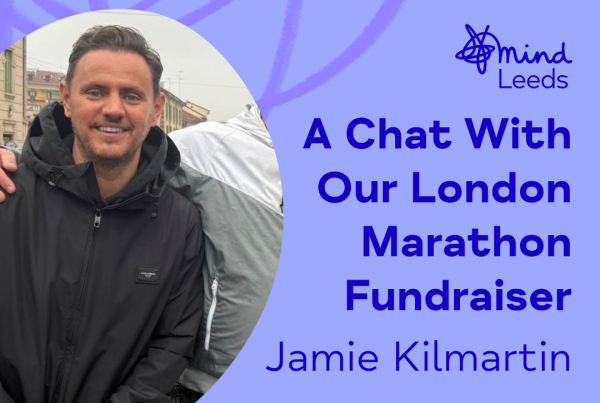


The Leeds Mindful Employer Network looks at what this year’s Mental Health Awareness theme means for mentally healthy workplaces.
Mental Health Awareness Week is an annual awareness event that helps normalise conversations about mental health, including in the workplace.
Most organisations now recognise that mental health matters at work. There’s more awareness, more openness, and more willingness to engage with the topic than ever before.
But this year’s theme asks something more of us: move beyond awareness — and take ACTION. And that’s where things can feel less clear.
The question is no longer just whether mental health matters. It’s ‘what does meaningful action actually look like in practice, and where do we start?’
One place to begin is by committing to clear, practical frameworks that support fair, healthy workplaces. Across West Yorkshire, the Fair Work Charter is one such approach, alongside the Mindful Employer Charter and the Leeds Mindful Employer Network, which support employers to turn intention into consistent, everyday practice.
This article includes:
- An interview with the Chair of the West Yorkshire Business Board
- A case study from Abraham Moon & Sons
- A conclusion with suggested actions
Taking Action Through Fair Work
We spoke to Mandy Ridyard, Chair of the West Yorkshire Business Board and a leading voice on fair work across the region, about what meaningful action looks like in practice, and how employers can get started.
From your perspective, what does meaningful action on workplace mental health look like for employers right now?
Meaningful action is about more than awareness campaigns or one-off initiatives. It’s about embedding mental health into everyday working practices.
That means creating a culture where people feel safe to speak up, where work is secure and manageable, where company policies reduce stress rather than add to it. Employers who have joined the West Yorkshire Fair Work Charter are reviewing how work is designed, listening to their workforce, training managers properly and committing to continuous improvement.
What is the Fair Work Charter and what is it aiming to achieve across West Yorkshire?
 The Fair Work Charter supports organisations across West Yorkshire of any size or sector, whether public, private or voluntary. It’s designed to help them celebrate the fair work they already offer and give them a roadmap to upgrading their practices.
The Charter sets out clear principles around fair pay, wellbeing, flexibility, equality, secure work and employee voice. The aim is to raise the bar for job quality across the region, creating healthier, more resilient workplaces while supporting inclusive economic growth that benefits your whole team and your organisation.
The Fair Work Charter covers areas such as fair pay, wellbeing, flexibility and employee voice. How does mental health and wellbeing sit within that wider picture of ‘fair work’?
Mental health and wellbeing are at the heart of fair work. Fair work recognises that people’s mental health is shaped not just by individual resilience, but by the conditions they work in.
Fair pay reduces financial stress. Flexibility supports work–life balance. Secure contracts provide stability and predictability. Giving employees a voice helps people feel valued and heard. When these elements come together, wellbeing improves naturally. The West Yorkshire Fair Work Charter encourages employers to see mental health as a shared, structural responsibility rather than an individual issue.
What are some of the practical benefits for employers who sign up to the Fair Work Charter?
For employers who want to enhance their working practices, the Fair Work Charter offers a clear framework that helps them prioritise their actions and measure their progress, rather than starting from scratch.
But fostering a culture of fair work isn’t just good for employees – it’s good for the bottom line. Member organisations report benefits like a more diverse and innovative workforce, a reduced skills gap, better productivity and an increase in sales.
There’s also a great reputational and networking value to being part of the Fair Work Charter. Demonstrating your commitment to fair work helps attract talent and build trust with customers and partners.
For organisations that want to take action but aren’t sure where to start, how accessible is the Fair Work Charter and what does the sign-up process involve?
The Fair Work Charter is designed to be accessible to organisations of all sizes and sectors. Employers can express their interest online in minutes. They then assess their current practices against the Fair Work Charter’s principles. We review the assessment and enrol the organisation as a Fair Work Charter member. It’s not about being perfect from day one, but about taking practical, achievable steps forward.
What support is available through the Fair Work Charter to help employers make meaningful improvements in areas like mental health and wellbeing?
There are two main areas of support. One is the learning and development portal, which has lots of fantastic resources and guidance to help an employer assess and strengthen their wellbeing practices. The other is peer support. Charter members can join regular network meetings and online webinars, which bring employers together to discuss their progress, challenges and solutions.
Alongside the Fair Work Charter, the West Yorkshire Combined Authority has launched Healthy Working Life, an initiative to help businesses become more inclusive and support employees with physical or mental health conditions to thrive in the workplace.
Employers can get step-by-step guidance, video case studies from local organisations, downloadable resources and legal advice. It helps give them the confidence and tools to provide effective and supportive working environments.
How do you see the Fair Work Charter complementing the work of the Leeds Mindful Employer Network?
The Leeds Mindful Employer Network plays a vital role in building awareness, confidence and practical skills around mental health. The Fair Work Charter complements it by providing a wider employment framework that embeds mental health into an organisation’s culture and practices.
This might be through offering more flexible working conditions or giving employees the stability of predictable, secure employment. Together, they create both the how and the why, supporting employers to take compassionate action while also addressing the structural factors that influence wellbeing at work.
For employers in Leeds who are already engaging with the Leeds Mindful Employer Network, how can signing up to the Fair Work Charter build on and strengthen that work?
While the Leeds Mindful Employer Network supports employers to build confidence and good practice around mental health, the Fair Work Charter helps embed those commitments into everyday policies and workplace culture.
Through the Fair Work Charter, employers have the opportunity to build on the positive practices they already have in place. The Fair Work Charter encourages employers to listen to their people, provide secure and fair work and support employee progression.
If there’s one action you’d encourage employers to take during Mental Health Awareness Week, what would it be?
If you do one thing this week as an employer, then listen. Listen to employees about what they need to support their wellbeing at work. You’ll probably get a lot of suggestions, some of which will be really easy to implement and some which will be really hard.
That’s exactly where the Fair Work Charter comes in. Not every initiative is right for every organisation, so the Charter gives you a lot of avenues to pursue. The important thing is to turn those conversations into lasting action. If you can do that, you will have a practical framework for making lasting changes that benefit both people and organisations, well beyond Mental Health Awareness Week.
— Mandy Ridyard, West Yorkshire Business Board
With a background in chemistry and manufacturing, Mandy moved to West Yorkshire in 1994. Having worked for CarnaudMetalbox, Mars Inc and Rank Hovis McDougall, she jointly led a buyout of Produmax in 1997
Produmax are aerospace engineers and are global experts in flight assemblies exporting 70% of turnover worldwide to prestigious clients including Boeing. Her leadership has seen Produmax achieve world-class employee engagement, win two prestigious national aerospace awards and the MAKE:UK SME of the year 2021.
Joining the board of the Leeds City Region LEP in 2019, she now chairs its successor, the West Yorkshire Business Board. She was appointed as Business Advisor to Mayor Tracy Brabin in 2023
Mandy is passionate about Business, Innovation, Skills and Inclusivity. As Chair of Space Hub Yorkshire, she has led the development of a regional strategy for space and is now leading its deployment. She is also Chair of the West Yorkshire Innovation Network, was a future ready Skills Commissioner and is an advocate for our region, innovation, manufacturing, productivity, women in engineering and skills.
What This Looks Like in Practice: Abraham Moon & Sons
Frameworks and charters are important, but what does this actually look like day to day?
We spoke to Claire Burns, People Director at Abraham Moon & Sons, who are signed up to the Fair Work Charter, the Mindful Employer Charter, and are active members of the Leeds Mindful Employer Network. Read our conversation with Claire to find out more about how this works in meaningful practice.
Abraham Moon & Sons is signed up to the Fair Work Charter, the Mindful Employer Charter, and is an active member of the Leeds Mindful Employer Network. What motivated you to get involved in these initiatives?

Claire Burns, People Director at Abraham Moon & Sons
Our motivation for joining comes from a genuine commitment to doing the right thing for our people. At Abraham Moon & Sons, we believe that a sustainable, high‑performing business starts with a workforce that feels valued, respected and supported. These initiatives align strongly with our values by promoting fair employment practices, enhancing wellbeing, and creating a culture where people can thrive. Being part of these charters validates the work we’re already doing, helps us continually improve, and ensures we’re holding ourselves to high standards as a responsible employer.
From an employer perspective, what does being part of the Fair Work Charter look like in practice, day-to-day?
For us, being part of the Fair Work Charter is really about how we show up every day as an employer. It means making sure people are treated fairly, listened to, and supported. Not just in policies, but in the small day‑to‑day decisions we make. Practically, it guides how we recruit, how we develop our teams, how we communicate, and how we make sure everyone has a good experience at work. Strategically, it keeps us focused on doing the right thing as we grow: investing in skills, creating progression opportunities, and building a culture where people feel they belong. The Charter gives us a clear benchmark, but it also validates what we’re already doing and pushes us to keep improving
The Fair Work Charter includes a strong focus on wellbeing. How have you approached this within your organisation, and what difference has it made?
Wellbeing has become a really central part of how we look after our people. We started by getting the basics right by trying to create a culture where people feel safe to speak up, checking in regularly, and making sure support is easy to access. From there, we built on it with things like mental‑health awareness training, encouraging open conversations, and making sure managers understand the signs when someone might be struggling.
The biggest difference for us is treating wellbeing as something that’s part of everyday life here, not just a one‑off campaign or a box to tick (my biggest bugbear!). When people feel consistently supported and able to be open about how they’re doing, you can really feel the shift. We’re seeing colleagues more engaged, more willing to speak up, and generally feeling more positive at work. It’s created a much healthier atmosphere, and that kind of culture benefits everyone
As a Mindful Employer Charter signatory as well as being part of the Fair Work Charter, how do you see the two complementing each other? And how does the Mindful Employer Charter support your organisation in delivering on the wellbeing pillar of the Fair Work Charter?
For us, the Fair Work Charter and the Mindful Employer Charter really go hand in hand. The Fair Work Charter sets out the bigger picture of what good, fair employment should look like, and the Mindful Employer Charter helps us bring that to life through a really strong focus on mental health and wellbeing.
Being part of the Mindful Employer Charter gives us practical tools, shared learning and a supportive network that helps us look after our people in a meaningful way. That directly strengthens how we deliver the wellbeing pillar of the Fair Work Charter because it’s not just about saying we care, it’s about having the confidence, training and resources to actually support people day to day. Together, the two charters help us create a workplace where fairness, wellbeing and good work genuinely sit at the heart of how we operate.
As a business, you can also look at it as two sources of support, advice and information.
What have been the most valuable benefits of signing up to the Fair Work Charter for your business and your people?
For Moon, signing up to the Fair Work Charter has been incredibly valuable. It’s given us a clear way to show our commitment to doing the right thing and to celebrate the things we’re genuinely proud of as an employer. It’s helped us reflect on what we already do well, but it’s also pushed us to keep improving and stay accountable.
For our people, it sends a really strong message that fairness, wellbeing and good work genuinely matter here. And internally, it’s helped strengthen our culture, build trust and create a workplace where people feel respected, supported and part of something positive. That’s been the biggest benefit of all.
How has your involvement with the Leeds Mindful Employer Network supported your work around mental health and wellbeing?
Being part of the Leeds Mindful Employer Network has been a huge support for the work we’re doing around mental health and wellbeing. For me personally, joining the steering committee has been brilliant, I get to meet lots of like‑minded people who genuinely care about creating healthier workplaces, and I can tap into their ideas, experience and resources whenever we’re looking to develop something new.
For Moon, the network gives us practical tools, fresh perspectives and a safe space to learn from others who are facing similar challenges. It’s helped us build confidence, strengthen our approach, and keep wellbeing at the heart of how we support our people day to day. It really feels like we’re part of a community that wants to make a positive difference, and that’s vital.
Are there any specific Leeds Mindful Employer Network resources, events or connections that have helped you deliver on the wellbeing pillar of the Fair Work Charter?
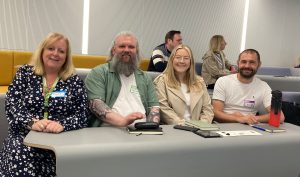 There are definitely a few things from the Leeds Mindful Employer Network that have really helped us deliver on the wellbeing pillar of the Fair Work Charter. The events are always full of useful insights, hearing what other employers are trying, what’s worked for them, and even what hasn’t, is incredibly valuable. The shared resources, toolkits and training sessions have also given us practical ideas we can bring straight back into the business, as well as case studies in the 10-step toolkit. And because I’m part of the steering committee, I get to connect with so many fantastic, like‑minded people. Those relationships have been a real bonus as I can reach out for advice, pick up new approaches, and tap into a whole range of experience whenever we’re looking to strengthen our wellbeing offer. It really feels like having a supportive community around you, and that’s made a big difference, especially as HR can be a lonely place at times.
For other employers who want to take meaningful action this Mental Health Awareness Week, what would you say to them about signing up to the Fair Work Charter and engaging with the Leeds Mindful Employer Network, or becoming a Mindful Employer Charter Signatory?
I’d say if you’re looking to take meaningful action this Mental Health Awareness Week, signing up to the Fair Work Charter or becoming a Mindful Employer Charter Signatory is a really positive place to start. It gives you a clear framework, lots of practical support, and it shows your people you’re genuinely committed and not just saying the right things, but backing it up.
Getting involved with the Leeds Mindful Employer Network has been brilliant for us too. You’re not doing it alone and you’ve got a community of employers who share ideas, resources and real-life experience, which is great for small businesses with limited resources. It’s a great way to learn, take inspiration and build confidence in what you’re doing.
If you care about creating a healthier, fairer workplace, these networks and charters make the journey feel much more supported and achievable. I’d honestly encourage anyone to get involved – you get out far more than you put in.
Thanks so much to Claire Burns for contributing to this piece.
From Awareness to Action
Action is what changes workplaces, and it starts with what happens next.
The decisions, the conversations, and the actions that follow.
As we’ve heard here, action doesn’t need to be complicated.
It can start with:
- committing to a clear framework, like the Fair Work Charter
- strengthening your approach through signing the Mindful Employer Charter
- connecting with other employers through joining the Leeds Mindful Employer Network
None of these are quick fixes. They’re about building workplaces where fairness, wellbeing and good work are part of everyday experience — not just something we talk about once a year.
If this year’s Mental Health Awareness Week is about taking action, this is a strong place to start.