

As the Leeds Mindful Employer Network prepares for LGBT+ History Month in February, many employers are asking how they can recognise the month in ways that genuinely support LGBTQIA+ inclusion. It’s common to feel unsure about how to take thoughtful, informed action rather than relying on surface‑level gestures – a tension we hear often.
As part of our work to help employers build mentally healthy and inclusive cultures, Mindful Employer Project Lead Leigh Staunton spoke with Hannah and Katie, Co‑Founders of The Alphabet Collective. They discussed their journey, their work with LGBTQIA+ young people in Leeds, and their “Beyond Pride” awareness training for organisations. Their conversation explores what meaningful inclusion looks like day to day, why confidence matters as much as knowledge, and how employers can move beyond one‑off moments toward sustained, thoughtful action.
While LGBT+ History Month is a valuable opportunity for learning and reflection, this discussion reinforces that inclusion should be woven into everyday culture, language, policy and behaviour all year round.
Firstly, please tell us a bit about you, what led you to create The Alphabet Collective and why you developed the ‘Beyond Pride’ LGBTQIA+ awareness training offer.

Hannah (she/they) Co-Founder of The Alphabet Collective and ‘Beyond Pride’ LGBTQIA+ Awareness Training
We’re Hannah (she/they) and Katie (she/her), Co-Founders and Lead Youth Workers at The Alphabet Collective, which is a registered charity for LGBTQIA+ youth in Leeds. Between us, we have over a decade of professional experience in the third sector including youth work, disability, mental health and peer support working with charities such as Barnardo’s, Barca, Touchstone, Getaway Girls and The National Autistic Society. Alongside our youth work, we’re passionate about training organisations, professionals, and schools in LGBTQIA+ inclusion and allyship. So we are pleased to bring our ‘Beyond Pride’ LGBTQIA+ Awareness training to organisations and deliver this across Leeds.
After working with young people and LGBTQIA+ communities, we noticed there was a gap in support services for 18-25-year-olds. There were some groups for children and teenagers, and then general 18+ spaces, but nothing focused specifically on LGBTQIA+ people transitioning into adulthood. We wanted to create something unique – a grassroots service with young people at the heart of everything we do.
Aside from age, we didn’t want to put in fixed criteria for people to meet in order to join our services. We never ask people to share how they identify – we want people to be able to express their fluidity and be safe to explore expression, identity, and pronouns. So often, people feel, ‘Am I [insert identity term] enough to attend that group?’ We didn’t want people to feel restricted or have to find a label to ‘fit’ into our group. Many young LGBTQIA+ people face marginalisation, discrimination, social isolation, estrangement, mental health challenges, and increased barriers to accessing services. We both identify as queer and have seen first-hand how challenging it can be to find a community and a sense of belonging. We wish we’d had a space like The Alphabet Collective when we were young adults!
Tell us a bit more about the work of the Alphabet Collective.
The Alphabet Collective began as a peer support group in 2021 within the charity Getaway Girls. In 2023, we secured a small pot of funding, allowing us to become an independent organisation. Two years later, The Alphabet Collective is now a registered charity and an established key support service in Leeds! Our work is centred around creating inclusive, low-pressure spaces where young people can explore identity, feel affirmed, supported and celebrated for who they are. We do this through our weekly social group in Leeds city centre and our one‑to‑one support service, Empower Hour.
From group activities and peer support to advocacy, creative workshops and fun social experiences, everything we offer is about building confidence, connection and wellbeing. We support young LGBTQIA+ people as early as possible, creating spaces where belonging and acceptance come first. Along the way, friendships form, communities grow stronger, and young people gain the confidence and self‑esteem they need to thrive.
Employers often feel nervous about getting LGBTQIA+ inclusion “wrong”. How does your ‘Beyond Pride’ LGBTQIA+ awareness training help build confidence as well as knowledge?
We understand that LGBTQIA+ inclusion can sometimes be a daunting topic to explore as nobody wants to say the wrong thing or offend anyone, but it’s so important that employers don’t shy away from it. People can be so afraid to get it wrong they avoid it altogether, and we think the more a topic is avoided, the more it becomes this mystifying and confusing thing; increasing your knowledge and awareness will dismantle that and give employers more confidence.
Our training is focused on sharing knowledge and awareness as well as lived and personal experience of LGBTQIA+ communities. We think it’s so important that we create a training environment that is non-judgmental, where people can learn at their own pace and not be afraid to ask questions. The aim will always be for staff to leave feeling more confident and knowledgeable about the topic and to want to continue the conversations beyond the training room. Our sessions always start with a group agreement, which is a list of ways we can make sure the session is productive and safe. As it’s written and agreed by the attendees, this sets the tone for the day and gives people more confidence to contribute.
What are some of the most common barriers to meaningful LGBTQIA+ inclusion? Any tips for how employers can overcome these?

Katie (She/her), Co-Founder of The Alphabet Collective and ‘Beyond Pride’ LGBTQIA+ Awareness Training
Katie: I do think one of most common barriers to meaningful LGBTQIA+ inclusion is this fear of “getting it wrong”. This fear also adds weight to thoughts like, “I’m not part of this community so I either shouldn’t or won’t speak on it or get involved.” Both historically and in contemporary society, marginalised communities have been focal points of political debate and ideological conflict. It may feel easier for people to default to ‘everyone is equal and can be/love who they like’, than to actively work toward meaningful inclusion. I think it’s important for organisations to recognise that we still have a long way to go. Sometimes it can feel as though organisations are ticking boxes or being tokenistic in their inclusion efforts, for example flying the Pride flag in June without taking measures to support their LGBTQIA+ staff in practice or policies.
A way for organisations to overcome these barriers is to be consistent and visible in their intentions and actions. This requires both staff and leadership to stay up to date with relevant legislation, understand the wider political and social climate, and be informed about the rights and lived experiences of LGBTQIA+ communities.
Hannah: In my experience, it can be challenging for employers to listen to and include LGBTQIA+ people in service development and decision-making, while being mindful not to put all the labour onto them and expecting them to be experts on LGBTQIA+ inclusion. I’ve certainly felt tokenised or put on the spot in some work contexts. It’s all about ensuring services and working environments are welcoming, supportive and affirming so that communities feel included and seen. This can be as simple as shifts in the language we use, to avoid making assumptions. For example, using “folks” or “everyone” instead of “ladies and gents” and including our pronouns in introductions at the start of meetings. I use multiple pronouns, she and they, and I often find this can confuse people, so they just default to using she because it’s the norm. When actually, myself and others alike find it really affirming when people use both – or ask which I’d prefer!
Katie: While some organisations are encouraging staff to include pronouns in their email signatures (which is positive!) it’s often not explained why this is important and some staff may not feel confident in pronoun use in-person. That’s where LGBTQIA+ awareness training comes in, giving employees the opportunity to reflect on both how they can be more inclusive and why they should be. In an ideal world, this training would be mandatory, so everyone’s on the same page and LGBTQIA+ inclusion becomes part of the culture.
Why does LGBT+ History Month matter for employers, and what are some meaningful ways workplaces can mark it beyond surface-level gestures?
LGBT+ History Month is a great opportunity to dedicate some time to exploring and celebrating remarkable people and events which have contributed LGBTQIA+ culture, and society on a whole. A really meaningful gesture is to research some less heard of figures throughout history. We often get shown the same faces when it comes to LGBTQIA+ history, which is still amazing to see but these are often the people who have been deemed ‘acceptable’ by mainstream culture, and not erased from the history books like so many queer people have been. We don’t get told that it was in fact LGBTQIA+ people of colour who invented the first wireless phone networks, satellites for NASA or lead the initial gay rights movements in the 1960s. So, it’s important to mark the month with events and conversations which centre LGBTQIA+ folks who experience the least visibility, and that continue beyond the month throughout the rest of the year.
To mark LGBT+ History Month at The Alphabet Collective, we’re teaming up with Barca to deliver a series of workshops to young people surrounding queer history in Leeds. After exploring key LGBTQIA+ figures and locations across the city, we’ll produce a mini zine which will be shared online, and amongst third sector organisations. We hope that by providing a free, creative and informative resource, the legacy of History Month can continue to be shared throughout the year.
If an employer could make just one meaningful change after LGBT+ History Month, what should it be?
LGBT+ History Month is a brilliant way to explore the profound journey of LGBTQIA+ rights, historic and contemporary representation and key timelines, however, LGBTQIA+ history is more than just a one-off celebration. Whilst celebrating History Month is incredibly important, employers can make meaningful changes within the organisation throughout the year by integrating LGBTQIA+ inclusivity and embedding a sense of community within the workplace. This could include the presence of pride flags, posters, badges, LGBTQIA+ support networks, dedicating time in teams to practice using gender-neutral pronouns, and adapting resources to centre LGBTQIA+ identities. To see representation within the workplace holds immeasurable value for LGBTQIA+ communities, it helps us feel safe, welcomed and affirmed. Knowing that an organisation does not shy away from LGBTQIA+ inclusivity, especially outside of History Month, allows us to feel visible, and may even encourage many who aren’t ‘out’ to their employer or colleagues, to feel comfortable sharing their identity. Employers may also want to create meaningful and sustainable goals surrounding inclusive and anti-oppressive practice, such as equitable recruitment aims or policy changes, and implement action plans on how to achieve them.
Tell us a bit more about what employers can expect from your ‘Beyond Pride’ LGBTQIA+ awareness training.
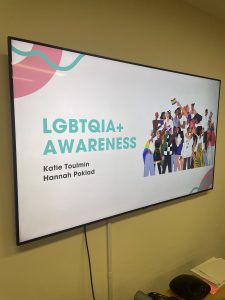 We provide bespoke training which can be adapted and tailored to an organisation’s needs and objectives. For example, we’ve previously been asked to focus on the intersections of neurodiversity and disability within LGBTQIA+ communities, centre historical representations and timelines of LGBTQIA+ rights, and highlight the impacts of the 2025 Supreme Court ruling on trans people within organisations. We usually deliver training onsite at an organisation’s premises, however we are able to hire venues for an additional cost should an organisation not have access to a suitable space. We can also offer training online. Sessions can vary from anywhere between a one-off half or full day session, to a more in-depth series of workshops over a period of time. We’re keen to really get to know an organisation and understand how we can deliver meaningful sessions that align with their aims, so we always arrange an initial consultation free of charge with anyone interested in receiving training. After finding out more about the employer’s needs, we’ll be able to give a quote for the training. We feel it’s important to redistribute our income back into the community, therefore a percentage of our profits are donated to community groups who support LGBTQIA+ people. To find out more about our training, receive an information pack, or book a consultation, get in touch with us! Drop us an email at: beyondpride.training@outlook.com
What do you hope employers take away from your training long after the session ends?
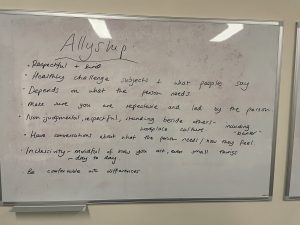 Our aim is to instil long-lasting change within the culture of organisations, by enhancing people’s personal and professional attitudes toward LGBTQIA+ communities. We believe everyone takes something different and unique away from our training, depending on their role and their existing knowledge. For some it may be a greater understanding of pronouns, for others it may be guidance on how to implement structural and strategic changes from the top down. But we hope that everyone who attends will feel a greater sense of confidence in approaching LGBTQIA+ inclusion and empowerment!
Thank you to Hannah and Katie for contributing to this blog.
Get in touch about ‘Beyond Pride’ LGBTQIA+ awareness training on email at: beyondpride.training@outlook.com
Find out more about the work of The Alphabet Collective
Not part of the Leeds Mindful Employer Network yet? It’s free, quick and easy to become a member via this link.
Find out more about signing the Mindful Employer Charter to make a public demonstration of your commitment to employee wellbeing