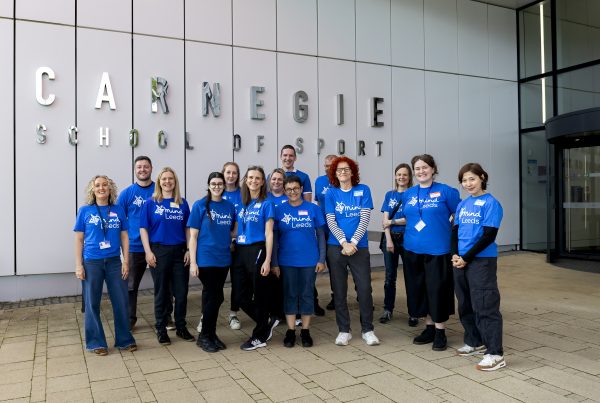

In conversation with the Leeds Mindful Employer Network ahead of International Women’s Day, Jill Gaffrey, Menopause Lead & Advocate at Touchstone, shared how a quiet conversation between three colleagues grew into a seven-year commitment to making menopause a visible, supported and openly discussed part of working life. What began as whispered exchanges in a staff kitchen has evolved into training, peer networks and a cultural shift that ensures staff feel heard, understood and able to thrive at work.
What prompted your organisation to take menopause seriously as a workplace issue?
 This all started with three members of staff whispering in the staff kitchen, sharing our awful experiences that were affecting us at work in relation to the menopause. We felt embarrassed about what we were experiencing and didn’t really know how to feel better or what was happening to us.
We knew lots of other women would be affected at work by the menopause and felt strongly that these whispers needed to become open conversations. We wanted to raise awareness, reduce the stigma attached to menopause, and create a workplace where staff at Touchstone felt heard, understood and valued. We also wanted to raise awareness of the symptoms of perimenopause and menopause.
We were three experienced and competent women in management roles. We recognised that many staff could be feeling the same, particularly as a high proportion of Touchstone’s workforce are women and could potentially be affected by the symptoms of perimenopause and menopause. We are all passionate about wellbeing, but we knew this was an area that had been taboo for far too long in many organisations.
It was time this was tackled. We approached Touchstone’s Senior Leadership Team to discuss how we could break the stigma and lack of awareness around menopause, with the aim of improving staff wellbeing at work.
The Senior Leadership Team fully supported this and asked, “What do you need from us to support you?”
That starting point was crucial. We asked our staff — including people of all genders — what they felt they needed. We wanted to understand how they were currently supported and what more Touchstone could do to support staff who were perimenopausal and menopausal.
The responses were overwhelming. Hearing how many staff were affected by menopause and struggling with the impact on their wellbeing was a huge motivating factor to take action.
The survey gave us clear direction — and so the menopause journey began.
How have senior leaders demonstrated that menopause support isn’t just an HR initiative, but a cultural priority?
The “Menopeers” staff network was not created by the Senior Leadership Team (SLT), but with their full support. The staff network was created organically by staff directly affected by menopause who felt passionately about raising awareness, reducing stigma and supporting other people of all genders.
The organisation-wide Menopause staff network group encompasses the whole menopause support offer at Touchstone. This includes wellbeing support, training, raising awareness and providing guidance for managers and staff. The network has been led throughout by staff — myself included — who feel strongly about increasing understanding of the effects of menopause.
The SLT have been on board from the beginning. They supported the “Menopeers” Network in developing organisational objectives and a clear vision statement. With SLT support, the network has become embedded within the organisation. Information about the network is included in the welcome booklet for new starters and in Touchstone’s health and wellbeing guide.
A member of SLT joined our small steering group to help create our “Menoplan” Menopause Policy in 2019.
Our purpose and vision were clear:
- To reduce stigma and increase awareness of menopause, including perimenopause, and make Touchstone a more inclusive workplace for all staff and volunteers.
The policy was not created immediately. We wanted it to be co-produced with staff affected by menopause. The “Menoplan” was implemented later in 2019.
To ensure menopause awareness was meaningfully embedded, SLT supported me, in my role as Menopause Lead, to undertake specialist training so I could deliver “Menopause Awareness” sessions to all of our staff. This is now mandatory training for all employees.
We recognised that for staff to feel able to approach their manager for support, managers needed the right knowledge and confidence. We began by delivering “Menopause Awareness for Managers” to more than 50 managers in 2023, and we continue to deliver this training now.
A key factor is that members of SLT and managers openly share their own experiences of being perimenopausal or menopausal and how this impacts them at work. This openness encourages others to speak about their experiences and is central to the supportive culture we have created.
The “Menopeers” staff network also has a small budget, which the group decides how to use to create the greatest impact for staff affected by menopause.
SLT provide the freedom, support and recognition the network needs to progress realistic actions. These were the building blocks of what we have developed over the past seven years.
Beyond having a menopause policy, what practical changes have you made to day-to-day working life?
This journey has evolved over the last seven years, and menopause is a very individual experience for those affected.
We wanted to put practical mechanisms in place so that menopause wasn’t just referenced in a policy document but became a visible thread running through the organisation. Our aim was to create a genuinely open culture — one that talks about menopause, supports those affected and actively promotes awareness across the workplace.
Raising awareness and talking openly was where we started. Examples include:
- As Menopause Lead, I created an induction video introducing the support available and how staff can access it. This is shared with staff on their first day at Touchstone.
- The Menopeers staff network is promoted during induction and within the staff health and wellbeing handbook.
- I undertook training to deliver mandatory “Menopause Awareness” sessions to all staff.
- We began with SLT and managers, incorporating “Menopause Awareness for Managers” into our 2023 Management Development Day, training more than 50 managers.
- Sessions are now offered across the wider organisation, both online and in person.
- I regularly share information, resources, links and videos to support staff wellbeing across the organisation.
- I offer one-to-one support to staff and managers to explore adjustments that can help people stay and thrive at work during menopause.
- Posters promoting the Menopeers group and information about menopause symptoms are displayed across sites.
Can you tell us more about your menopause or “Menopeers” network — how it started and how it works?
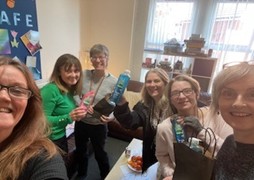
The Menopeers group at a meeting exploring health, wellbeing and managing stress.
The network began following the staff survey, where staff asked for:
“Talk about your experiences, find out what worked for others who have been through this.”
“Maybe a group session. To openly discuss and not feel alone.”
“Information sharing and group support network would be helpful.”
The “Menopeers” Staff Network is an informal, peer-led group for staff directly affected by menopause. Meetings are held quarterly during work time and take place both online and face-to-face.
Each session provides space for everyone to share their experiences, offer peer support and discuss related themes and topics. This may include nutrition, exercise, treatment options and available support. It is a confidential space to talk openly, share food and treats — and despite the challenges menopause can bring, there is always lots of laughter.
What impact has the network had — on confidence, retention, or simply normalising conversation?
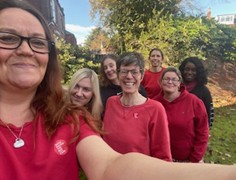
The Menopeers group at a meeting where they shared top tips on exercise and nutrition and what they could include in their day to day lives.
In our 2025 survey, staff said:
“Helps me to feel more normal and supports my mental wellbeing. Also allows me to share my experience with others and offer support.”
“It was a good environment to share experiences and discuss coping mechanisms to overcome some of the symptoms of menopause. It was a safe space to speak.”
“I have been part of a lot of organisations in my life, and menopause has always been a taboo subject with little support. I think it is amazing to be able to share openly with others and know that the organisation understands and takes the issue seriously.”
“It is a lifeline – I may have resigned, but this group/support. It enabled me to continue to work.”
“This group is an asset to TS – I say this because it has supported women to stay at work, manage their symptoms, remain in work and reduce sickness.”
Menopause is now talked about openly across the organisation. The actions we have put in place have normalised the conversation and removed the taboo.
How are you making menopause conversations inclusive — particularly for trans and non-binary colleagues?
We promote awareness that menopause support is inclusive of everyone who experiences menopause or menopausal symptoms as a result of hormonal changes, including trans men and non-binary staff.
Our “Menopause Awareness” training includes specific reference to trans men and non-binary staff, explored in more detail as part of the session.
The menopause staff network works alongside our LGBTQIA+ staff network and is part of our “Allies Together” umbrella group, which brings staff networks together and recognises intersectionality.
What are you doing to help male colleagues and managers understand menopause and feel confident having supportive conversations?
All staff, including those not directly affected by menopause, are required to complete mandatory training. This includes managers and staff who may be supporting colleagues, service users or someone personally affected.
The menopause journey began with raising awareness and understanding among the Management Team. Information and resources are available to everyone, helping managers feel more confident in having open conversations and encouraging attendance at the peer group.
How do you equip line managers to respond appropriately without overstepping or medicalising the issue? What does good management look like in this space?
Managers receive training that includes guidance on what to say, how to listen and where to signpost staff for specialist support.
Managers are not in a clinical role. They provide information and support, and staff are encouraged to access specialist organisations and medical professionals where appropriate. Symptoms vary greatly between individuals, so offering options and flexibility is key.
Health and Wellbeing is a standing agenda item in one-to-one meetings, held at least every eight weeks. This provides an opportunity to discuss anything affecting wellbeing, including menopause.
Menopause remains visible across the organisation through regular communications, one-to-ones and ongoing awareness activity. Managers and staff are supported to have open conversations, helping individuals feel safe to share their experiences if they choose to.
When asked what made a difference, frontline staff said:
“Listening without judgement.”
“Not being scared to ask about the menopause, and talk openly.”
“Talk about the Menopeers group and giving me time to attend.”
“Promoting the Menopeers group and mentioning this is team meetings.”
“Having a 1-1 wellbeing chat.”
“Agreeing a plan together of how best to manage my wellbeing.”
“Putting reasonable adjustments in place.”
What difference has this work made — in terms of retention, sickness absence, engagement, or performance?
Staff tell us that without this support, they would not have been able to remain in work. They have a greater understanding of menopause and are learning ways to manage it.
Staff shared:
“I am still learning ways to better manage the menopause and can say that we are lucky to have everything menopause to help us feel we still belong. It has taken the pressure off and enabled us to work efficiently.”
“It has avoided me going on sick and allowed me dignity. Dignity that I am still able to me and to not be so harsh on myself. Above all I see I am not alone. Thank you TS for this support – trust me it is has given me longevity.”
“I feel its has its greatest impact on raising awareness, overall knowledge and understanding and staff raising it with managers as a health matter.”
“It gave me greater insight into myself and my presenting issues.”
“It gave me confidence, so I could discuss menopause symptoms and support with my team who may not have recognised their changes themselves.”
“I think it makes things a lot less scary, I feel prepared going into perimenopause, particularly that I work for a supportive company.”
As a result of this work, sickness absence related to menopause is very low. No member of staff has left Touchstone due to menopause. Supporting staff in this way has improved retention, reduced turnover and strengthened our reputation as an inclusive employer, helping us attract diverse and talented applicants.
Has it shifted how people think about midlife careers?
Having an open culture, along with training and clear policies, has reduced potential barriers that may have discouraged staff from remaining in their role or applying for more senior positions. Staff know that adjustments and support will be available to help them thrive in any role at Touchstone.
If another employer wanted to start supporting staff impacted by menopause tomorrow, what would you tell them to prioritise?
Engage staff from the start — they will tell you what matters most in your organisation. Keep it achievable. Even small changes can make a huge difference. It starts with a conversation.
How does this fit with Touchstone’s identity as a Mindful Employer?
Touchstone recognises that menopause can significantly impact mental health, including anxiety, panic attacks, cognitive challenges, low mood, depression and sleep-related issues.
This work aligns strongly with our identity as a Mindful Employer and member of the Leeds Mindful Employer Network. Staff know they will be supported by managers and colleagues. They know it is a safe place to talk openly about how menopause affects them — including its impact on mental health — and that appropriate adjustments will be made to help them thrive at work.
Thanks so much to Jill Gaffrey, with the support of Touchstone’s Senior Leadership Team, for sharing their story for our February Employer Spotlight.
If you’d like your business or organisation to feature in an Employer Spotlight for the Network, please get in touch by email at mindfulemployer@leedsmind.org.uk. We’d love to hear from you.
Check out our Leeds Mindful Employer Network resource: A must-read, inclusive guide for all employers: supporting menopause at work
Sign the national Mindful Employer Charter.
Join the Leeds Mindful Employer Network.
Menopause Awareness Training from Leeds Mind
Interested in exploring menopause awareness training for your business or organisation?
Leeds Mind offers mental health and wellbeing courses designed and delivered by people with lived-experience, including sessions such as our ‘Perimenopause & Menopause Awareness’ and ‘Perimenopause & Menopause for Managers’. Our range of training is designed to help individuals, businesses and organisations better understand mental health, and the ways we can look after ourselves, our employees and those in our communities.
Courses can be delivered online or in person. You can explore our open access courses that are perfect for small groups and individuals, and we can discuss bespoke sessions to suit the needs of your organisation if required.
Read more about our Menopause Awareness courses here and contact training@leedsmind.org.uk to discuss booking a workshop for your organisation.