

Ahead of Race Equality Week 2026, the Leeds Mindful Employer Network explores this year’s theme, #ChangeNeedsAllOfUs; a powerful call for employers to move beyond statements of intent and take meaningful responsibility for creating inclusive, supportive workplaces.
In this blog, Ayesha Alvés-Hey, Director of Operations at Leeds Mind, shares her lived experience of equity, inclusion and discrimination at work, and reflects on the very real impact these experiences can have on mental health. She also introduces Leeds Mind’s new Supporting Staff At-Risk of Discrimination guidance, developed in direct consultation with staff, and encourages employers to engage with Race Equality Week not as a one-off moment, but as an opportunity to build lasting change, together.
Equity, inclusion, and lived experience in leadership
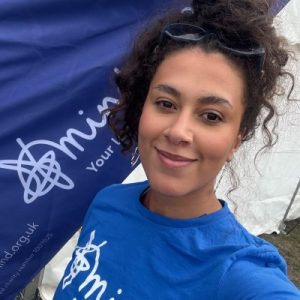
Ayesha Alvés-Hey, Director of Operations at Leeds Mind
I’m Ayesha, the Director of Operations at Leeds Mind. My role is to oversee the quality, performance and continuous improvement of the range of mental health and wellbeing services we deliver here at the charity.
To me, equity and inclusion mean creating an environment where every individual feels valued, respected, and empowered to contribute, regardless of their background, identity, or circumstances. It’s about ensuring fairness in opportunities and removing barriers that prevent people from thriving. And for me, it’s personal. I am a mixed-heritage – British & Caribbean – woman in a leadership position. I have been fortunate to work in environments in which I have been seen for what I bring to the table and treated accordingly. This is not to have my background or colour of my skin ignored, but to be able to use my lived experience to provide my perspectives, ideas and diversity of thought.
When workplaces reinforce stereotypes instead of safety
I have also had the displeasure of working in environments where I felt pressured to live up to a stereotype. I have had colleagues mimic an Americanised version of the ‘sassy black girl’ at me, had Jamaican accents thrown my way (my family are from Grenada), been offered fist bumps by my manager when everyone else had a handshake. I’ve also been outright called racial slurs at work, left with little support from management in these circumstances not due to a lack of care, but a lack of understanding. I found it unsustainable to continue in these workplaces, not only for the above, but for the general lack of understanding or advocacy to anyone who didn’t fit the mould. Resentment breeds discontentment, they say.
Why inclusion is essential for people and organisations
That’s why, in the workplace, this stuff matters. When people feel included and supported, they bring their best selves to work, which not only benefits the individual but also strengthens the organisation’s culture and performance. Diverse perspectives drive innovation, better decision-making, and stronger collaboration. Equality and inclusion aren’t just moral imperatives; they’re essential for building confident, empowered teams who stay with you. Not only from a racial perspective, but with respect to class, religion, disability, gender, whatever it is that makes staff who they are.
The mental health impact of discrimination
It is important for employers to know that discrimination can and does have a profound impact on a person’s mental health. From personal experience, I can say that the racism I experienced, mostly as a child, led to profound impact on my sense of identity. Low self-esteem, sadness, raging anger, resentment. Often, we accept the things that hurt us for the sake of fitting in and not making a fuss. And the more often it occurs, the more compounding an effect it has.
From a broader perspective, adults reporting discrimination on numerous occasions are 46% more likely to experience probable mental health issues, compared to those reporting it just once. It shifts your worldview and perception of how people truly see you, if you feel seen at all. It can make you defensive, protective, guarded. It can make you go the other way entirely and overcompensate to blend in. Or it might not. We often want a manual on approaching every situation with any eventuality, but people aren’t built like that. Entering the relationship without assumptions, getting to know them for who they are and what they need as an individual is usually the best route to go.
Supporting staff at risk of discrimination: Leeds Mind’s guidance
In December 2025, we put out our Guidance Document to all staff for ‘Supporting Staff At-Risk of Discrimination’. The document has guidance for line managers, staff at-risk, and for staff acting as allies, and there are certainly staff that fall under all of those categories depending on the nature of discrimination. We produced this guidance off the back of rising instances of hate crime in the UK, staff’s personal experiences and feedback on what would be helpful.
We produced it to increase confidence in our management team on a clear way to approach these scenarios, because we can’t assume that people instinctively know what do, or to say. And people can make mistakes or overlook the impact of discriminatory language or behaviour, especially when they are busy, and especially if it isn’t something they have experienced first-hand. That is understandable, but we need to do our best to be an organisation that advocates and curates an environment where people feel safe in work, empowered to speak up and know we will respond in their best interests.
And we didn’t do it alone as a team of managers, we did it in direct consultation with our staff teams who are on the ground delivering the support that is so vital to our communities. This was essential, as the people themselves know what they need and what would be helpful the most.
Keeping the work alive, visible, and evolving
My hope for this guidance is firstly that people feel assured we’re aware of what they may experience and that we will, in all cases, respond. Whether that’s through emotional support, practical action, policy change or anything they need in that instance. I hope that our staff acting as allies will feel empowered to step up their understanding and advocacy for colleagues experiencing discrimination, and that managers will take further meaningful steps in putting systems and structures in place to understand their staff’s experiences and respond.
The guidance is there to do just that – guide. But as we have said prior, there is no fixed manual for every occasion. I have no doubt it will be an iterative process, where we will change and adapt when presented with new information, or the climate changes. I hope we see the impact in staff wellbeing, our ability to dynamically respond to these changes or an occurrence of discrimination. We monitor instances of discrimination or hate crime through our incidents process, and from there we will see what steps have been taken and what difference the guidance has made. We will continue to promote it and revisit it through our equity-based groups in the organisation. It is imperative that we keep momentum on this work and not let it be a forgotten bit of paper left on the shelf (or in our case, SharePoint).
Race Equality Week: why talking about it matters
This year marks Leeds Mind’s fourth year supporting Race Equality Week, a campaign focusing on driving equality in the workplace. This year’s theme is Change Needs All of Us, which for us feels incredibly timely given our focus not only supporting staff from culturally or ethnically diverse backgrounds, but also on how we can be allies to one another.
My first week at Leeds Mind was in February 2025, during Race Equality Week, which was an immediately positive first impression for me, a mixed-race colleague. It provided the opportunity to engage with staff meaningfully on what can feel like difficult topics or simply topics that would never come into the consciousness of a person without that experience. It pulled on members from across the team to share content and insights on recognising privilege, code-switching, inclusive language and intersectionality.
Ultimately, it’s important to us because it gets us talking about hard things, how we can be better, the work we need to do. I have often heard over the years from potentially well-meaning people that if we just stop talking about it, it will go away. I just don’t think that that works. True understanding and progress come from talking about it. It can be challenging, it can be uncomfortable, it can also be jovial and humorous. It’s human connection and breaking down barriers.
I would encourage any workplace to take the leap, make a start, however small. The work is never done, but you get through it with each push toward making a change, and you will be better off for it.
Thanks so much to Ayesha for contributing this guest blog.
Get involved with Race Equality Week 2026
Not part of the Leeds Mindful Employer Network yet? It’s free, quick and easy to become a member via this link.
Find out more about signing the Mindful Employer Charter to make a public demonstration of your commitment to employee wellbeing