

Time to Talk Day is back on Thursday 5th February 2026 and we are inviting you to join us as we work to change the way mental health is talked about.
Talking about the way that we feel can be difficult. We might find ourselves avoiding being honest about our mental health out of concern that we are burdening others, ruining the mood, or alienating ourselves.
But creating space for open conversations and making it normal to check-in and talk about our feelings is one of the best ways that we can break down stigma. Then more people will be able to share what they are going through, know that it is normal to face challenges, and seek support.
That’s what Time to Talk Day is all about.
The nation’s biggest mental health conversation
Time to Talk Day is a yearly event aiming to break the ice on mental health conversations. It provides a reason for us to come together with our families, friends, colleagues and communities and dedicate time to talking about wellbeing.
Talking about wellbeing can mean lots of things. Whether that’s checking in with a friend and sharing self-care strategies, or letting people know that you need some company and making plans to spend time together. It might look like talking openly about your experiences with mental health challenges or sharing resources on your social media.
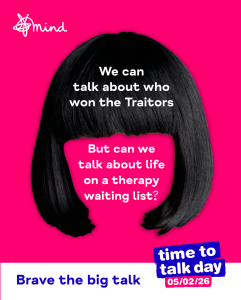
Stigma around mental health might make us think that talking about mental health is “oversharing” or “being negative”. We know that this perspective can be harmful, and doesn’t represent how universal and important mental health is.
Part of Time to Talk Day is about finding ways to get the ball rolling. We have put together a guide with some ideas for ways you can participate with Time to Talk Day.
How to get involved with Time to Talk Day
There are lots of ways to get involved. Below we have ideas you can explore that you might enjoy doing with your friends, at home, school or work, or out in your local community.
Walk and talk
Head out for a walk with a friend, colleague or family member and take the time to check in. Sometimes talking face to face can make it hard to be honest about our feelings. Walking side by side can relieve some pressure when talking about mental health. There are lots of great walking spots across the city and beyond, and a walk can be great self-care too!
Team breakfast or lunch
Dedicate some time for your students or colleagues to come together. Team breakfasts and lunches can be a fantastic way to create a warm and welcoming space, and encourage people to connect with their classmates and teammates.
Crafternoon
Mindful activities like crafts are a wonderful way to slow down and get creative. Much like a ‘walk and talk’, a craft gathering can be a great way to approach conversations about mental health, wellbeing and self-care in a calm and low-pressure environment.
School assembly
For schools, an assembly on mental health is the perfect way to demonstrate to pupils that mental health is a conversation to have loudly and proudly. Assemblies are a great tool to teach young people about the way that mental health challenges can present themselves, the ways that stigma and the language we use can hurt us, and how to look out for each other and seek support.
Pledge board
A pledge board is a great way to set goals and actively work towards changing the culture around mental health. A pledge board invites people to think about what they would like to do and see more of. You could work as a team to add pledges to the board and encourage people to reflect and add their own pledges. For example, a good pledge might be: “I will ask for support before things get too difficult to handle – I won’t try and face things alone” or “I will check in on my teammates once a week”
Shout about it on social!
For many of us, our biggest communities can be found online. Spread the word about Time to Talk Day by sharing resources, reposting content from Leeds Mind, or sharing how you are marking Time to Talk. Use the hashtag #TimeToTalk and tag @LeedsMind. We would love to see what you get up to.
These are just a few ideas that you might try for Time to Talk Day. There are lots of ways to make space for mental health conversations and that’s what this campaign is all about. Wherever you find your community, whether that is at the leisure centre, at work or school, at your local café or pub, it’s the perfect opportunity to make Time to Talk.
Tips for supportive and respectful mental health conversations
- Listen without fixing: Most people want to feel heard, not told what to do. Offer your presence rather than solutions, unless they ask.
- Stay non‑judgemental: Avoid minimising feelings or jumping to conclusions.
- Use open questions: questions like “How are you feeling today?” can help someone share at their own pace.
- Respect autonomy: Let them decide what, when, and how much they want to talk about.
- The new normal: Treat mental‑health chats as a natural part of everyday life, like discussing work problems or physical health
- Check in again later: A follow‑up shows genuine care and ongoing support.
Remember: it’s all about autonomy. This means that there is no expectation to share things if you don’t feel comfortable to. It’s not about telling everyone everything; it’s about creating a culture where people can feel safe to share if and when they want to.

“It’s easy to feel like you should give advice or try to fix things for someone who’s struggling, especially when they’re close to you, but you can often make a bigger difference to someone just by giving them space to share what’s going on for them.
For me, being given advice when I haven’t asked for it rarely helps, but someone I trust being there for me and listening with empathy and without judgment always makes a big difference. It lets me know that I’m not alone and helps the tricky times to feel more manageable.”
Yoshiko, Therapeutic Services Manager
Supporting local mental health services in Leeds and West Yorkshire
Talking about mental health is really important to break down stigma and create a society where everyone feels heard and safe to talk about their experiences. However, sometimes we might benefit from more specialised support to help us process challenging feelings and situations.
Leeds Mind offers a range of mental health services across Leeds and West Yorkshire. We have lots of different types of support available, including peer support groups, counselling services, suicide bereavement support, employment retention services, and training opportunities.
We’re here for you all year round. If you think you could benefit from dedicated mental health support, you can explore all our services and reach out to our team to learn more about the work that we do.
Get in touch with us by email at info@leedsmind.org.uk or give us a call on 0113 305 5800.
You can find more information about each of our services via our website.